0826585127
Call anytime
+27 826585127
The world of education is constantly changing. With state-of-the-art technology, new teaching methods are being explored all the time. Immersive learning is one such method that has gained popularity in recent years. Various immersive learning techniques are transforming the educational field, especially in primary and secondary schools.
Immersive learning is a teaching and learning approach that integrates technology with traditional methods of education, providing a more realistic and stimulating environment for growth. It focuses more on the experience of learning rather than if a student’s answers are right or wrong.
Immersive learning gets and keeps students’ attention for longer, as it is more engaging. Traditional learning methods can be boring, but immersive learning makes students feel like they are right in the middle of the action.
It engages the learner’s senses, increasing their comprehension of the material. For example, if they are learning about Ancient Roman History, they might walk through a simulation of Ancient Rome. Or, if the subject at hand is Science, they might use Virtual Reality to explore the inside of a cell.
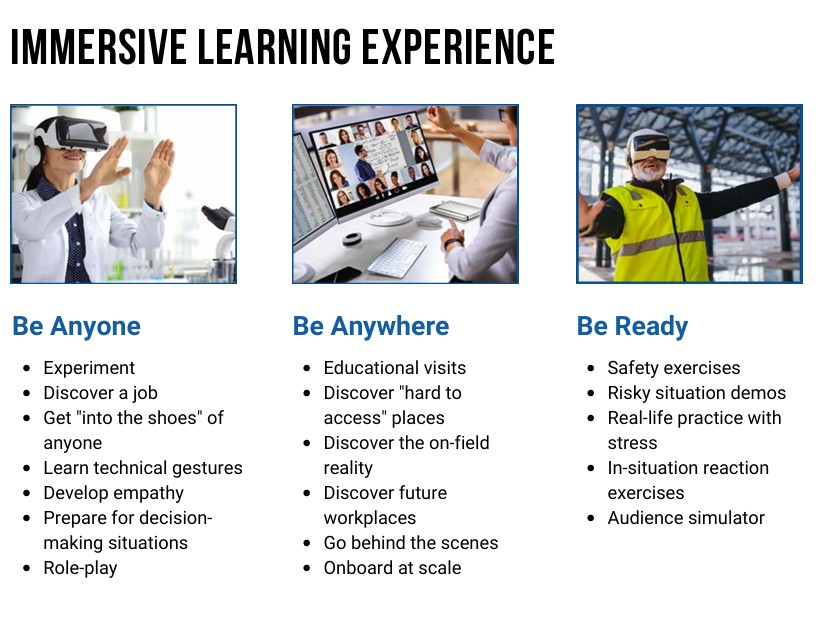

100% immersion leads to 100% attention, as learners are fully engaged in the experience.

Simulation and practice reinforce knowledge retention, enabling learners to apply what they've learned.

Gamification elements boost engagement, making the learning process more enjoyable and rewarding.

Emotional engagement is a key factor in memory and learning retention.

The ability to "fail, test, and learn" allows learners to repeat scenarios and solidify their understanding.